

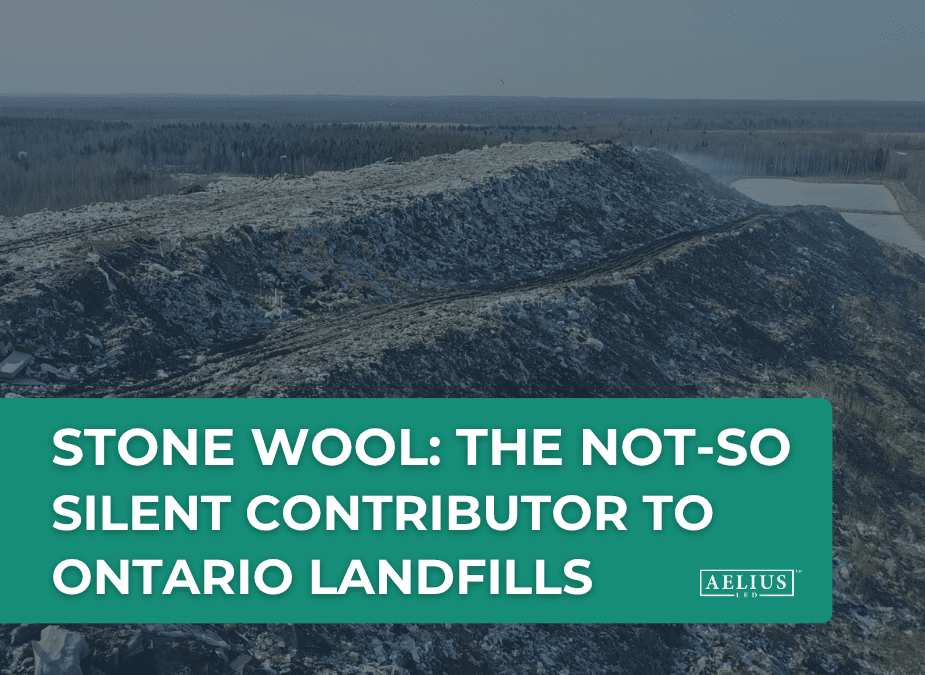
Stone Wool: The not-so-silent Contributor to Ontario Landfills
Did you know that over 150,000 tonnes of greenhouse waste are landfilled annually in the Leamington region alone? Of that total, an estimated 10–15% is stone wool.
Stone wool is a material engineered for performance, but not for disposal. And as Controlled Environment Agriculture (CEA) continues to scale, this disconnect is becoming harder to ignore.
What is stone wool?
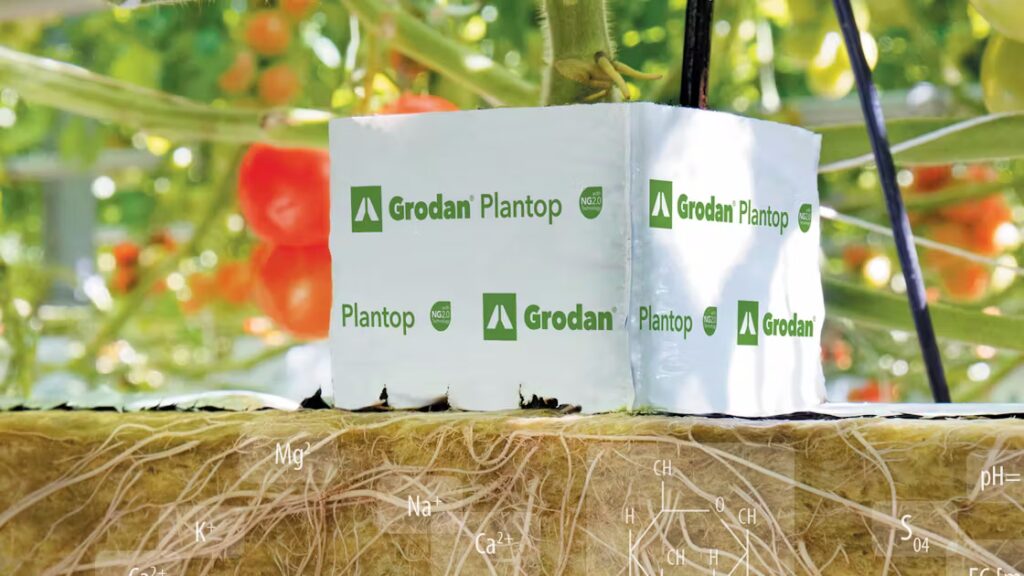
Stone wool, also known as rock wool, is made from basalt, a volcanic rock formed when lava rich in magnesium and iron cools rapidly at the Earth’s surface.
Through a high-temperature manufacturing process, this rock is spun into fibrous material that can be used for two main purposes:
- Insulation
- Soilless growing media
In CEA applications, stone wool is engineered to be pH-neutral and highly porous, creating ideal air-to-water ratios for hydroponic cultivation. This allows growers to precisely control nutrient delivery and root-zone conditions.
Why Do Growers Use It?
Stone wool has become a staple in greenhouse production for a reason. It enables:
- Higher yields
- Reduced water usage
- Consistent crop performance
Compared to traditional soil growing, hydroponic systems using stone wool can significantly reduce water consumption while improving productivity.
But while it solves one sustainability challenge, it creates another: waste management at scale.
These Numbers Are Only the Beginning
The 150,000 tonnes of waste reported in Leamington only reflect vegetable production.
Other major greenhouse regions like Chatham, London, and Niagara, each contribute roughly an additional 10% to this total. And that still excludes:
- Ornamentals
- Leafy greens
- Cannabis
So what’s the real number?
Much higher.
As greenhouse production expands across Canada, so does the volume of substrate waste, making stone wool disposal a growing environmental concern.
What’s The Solution?
Recycling is often presented as the solution and it’s a step in the right direction, but it’s not without challenges.
Companies like Grodan are actively working toward circular solutions:
- Recycling programs now reach over 60% of their global customers
- Recycling rates have reached approximately 45–65% in recent years
- Products can contain up to 75% recycled content
There are also emerging reuse pathways, including:
- Feedstock for brick manufacturing
- Compost and engineered soils
- Industrial bedding and potting mixes
However, scaling these solutions isn’t simple. Barriers include:
- Logistics and transportation
- Processing infrastructure
- Costs for growers
- Regional recycling availability
The Bigger Picture
Agriculture already consumes over 70% of the world’s freshwater resources. Technologies like hydroponics and materials like stone wool, play a critical role in improving efficiency. Sustainability in CEA can’t stop at production, it has to extend across the entire lifecycle, from inputs to disposal.
Where Do We Go From Here?
Stone wool has helped modern agriculture grow more with less. There’s no denying its role in advancing greenhouse productivity, but as the industry evolves, so must our approach to waste. Improving recycling systems, exploring alternative substrates, and designing for circularity will be key to ensuring that the tools we rely on today don’t become tomorrow’s environmental burden.
About Aelius LED
Aelius LED is a global supplier of premium Horticultural LEDs for all stages of a plant’s life cycle. Aelius aims to help cultivators worldwide realize the true genetic potential of their crops by providing results-driven Horticultural LEDs designed to master commercial cultivation. Aelius LED is dedicated to the discovery of new technology and contributing to growth of the controlled environment agriculture industry.
We have extensive experience helping growers secure the best rebate opportunities across the country, and we can do the same for you.
Check out our YouTube Channel!
One response to “Stone Wool: The not-so-silent Contributor to Ontario Landfills”
-

If the material originates as basalt, then why can’t it be dried, shredded and addled to soil as a mineral component, same as any other rock dust such as Spanish river Carbonatite which 100% basalt and an amazing soil amendment.








1 Comment
Comments are closed.
If the material originates as basalt, then why can’t it be dried, shredded and addled to soil as a mineral component, same as any other rock dust such as Spanish river Carbonatite which 100% basalt and an amazing soil amendment.